The four peoples
Four peoples on the North Sea in the early Middle Ages, from about 650 to 1000: the Frisians, the Franks, the Saxons and the Danes. Each one plays differently. Sea, land, forest and raiding: four ways to win.
No people wins by itself. Each has a strong side and a weak side, and another people that does well against it.
What they share
- Food, wood, iron and silver.
- The same thirteen buildings. The hall and the roofs look different for each people.
- The Terp Age, the Trading Age and the Kings' Age.
- The same keys and the same buttons. If you know the Frisians, you can play the Franks right away.
- Trade by sea with the hulk. The Frisians get the most out of it.
What each one has of its own
- Three units of its own, each in place of a regular one. The Franks get a fourth on top: the stone thrower.
- One rule of its own.
- Two technologies of its own.
- A fortress of its own in the Kings' Age.
A unit of its own counts as the unit it replaces. What makes the spearbearer stronger also makes the hirdman stronger.
Frisians
Merchants of the sea, quick along the coast.
Around 700 the Frisians traded from Dorestad to London and Ribe, with Frieze cloth and silver sceattas. They lived on terps along the Wadden coast. Frisian horses were known early on.
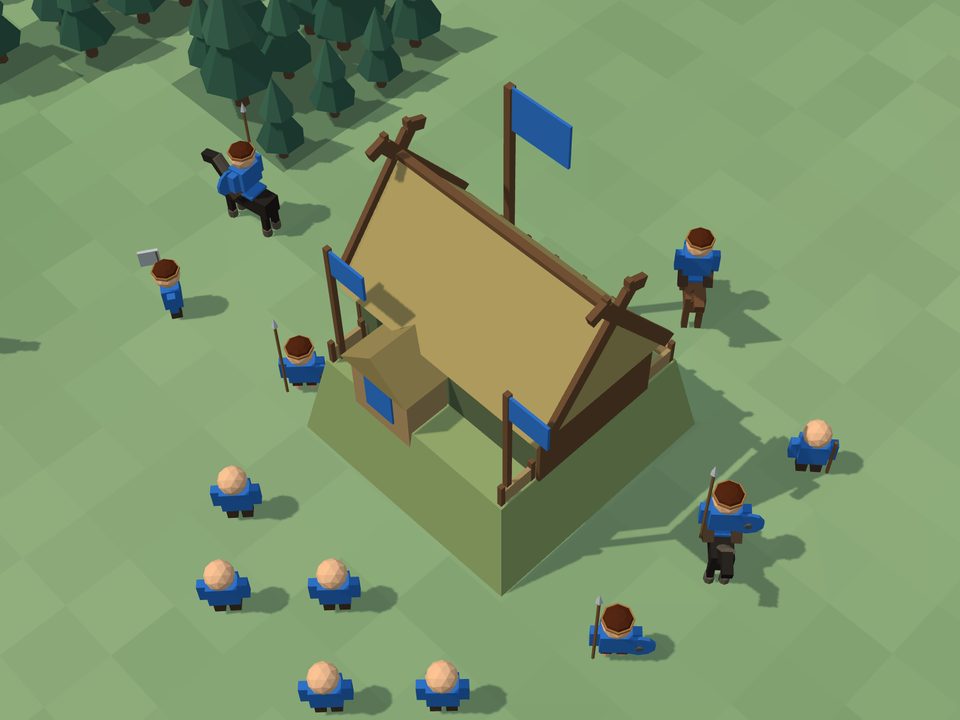
Now in the game: their own three units, the Merchants rule, Raise the Terp, Frieze Cloth, and Ringburh.
“Leaver dea as slaaf.”
Better dead than a slave, the well-known watchword of Frisian freedom.
Their own rule: Merchants
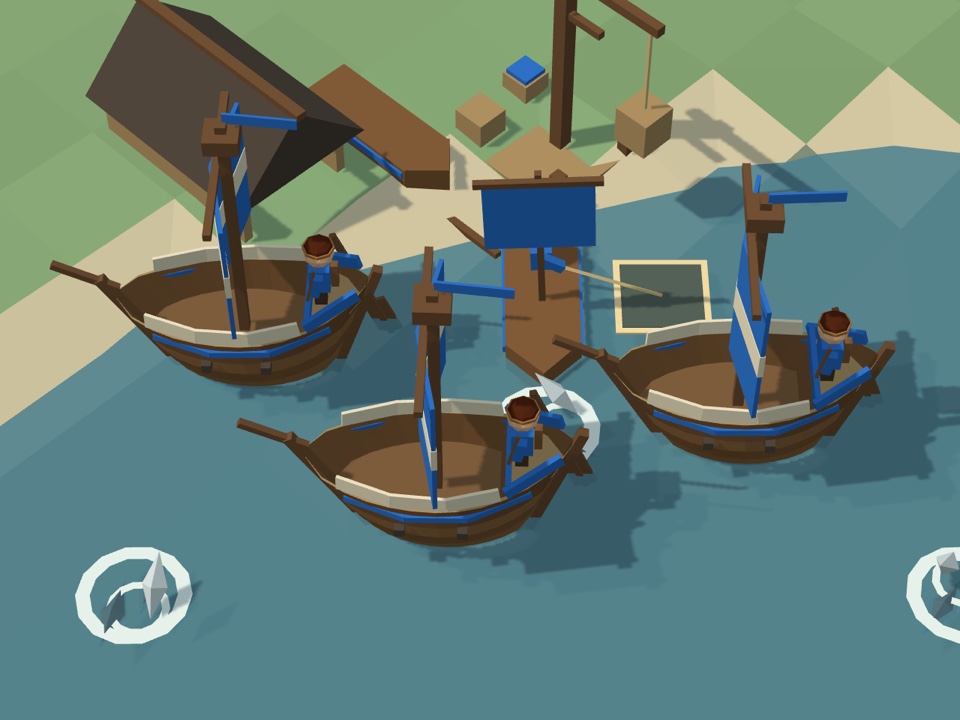
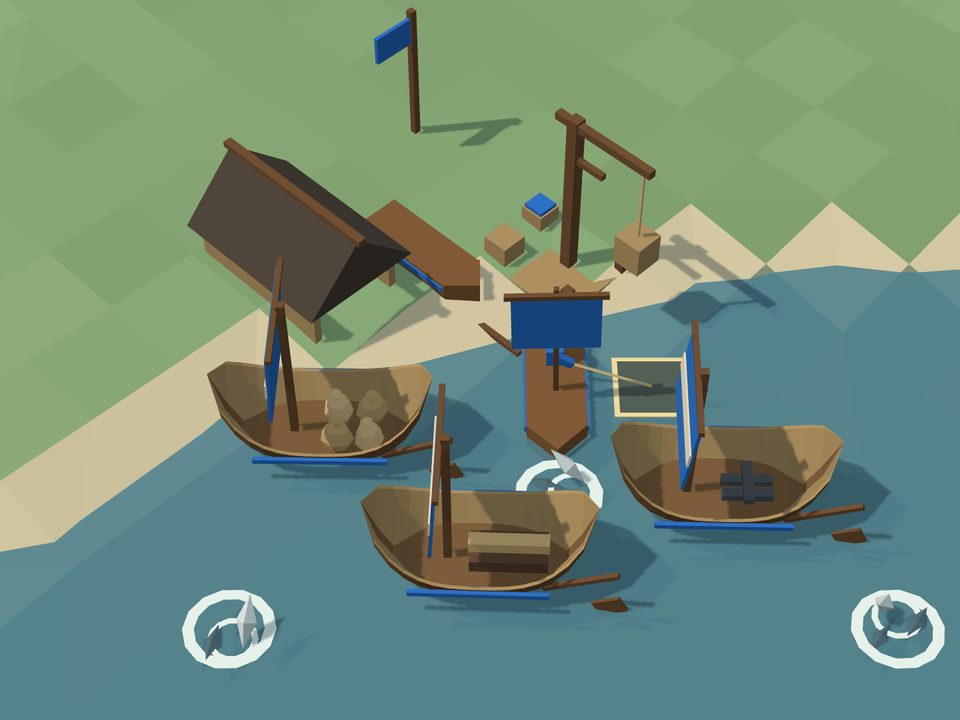
- A hulk brings back more silver from every trip. With Frieze Cloth, even more.
- Trade at the quay: at your wharf you swap one resource for another, always at the same price. You get back a little less than you give.
- That way the silver from the sea makes up for a lack of iron.
Their own units
-
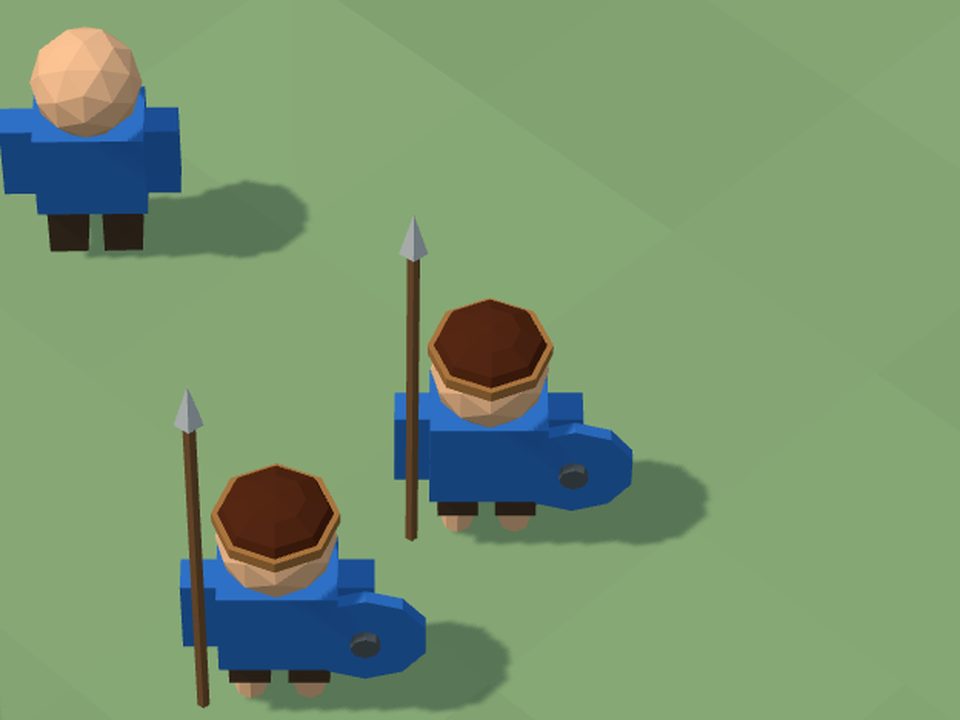
Two tidewalkers, with the leather cap and round shield of the Frisians. Tidewalker
Instead of the spearbearer
Faster than a spearbearer on low land. So he is quick to reach the coast where the enemy lands.
-
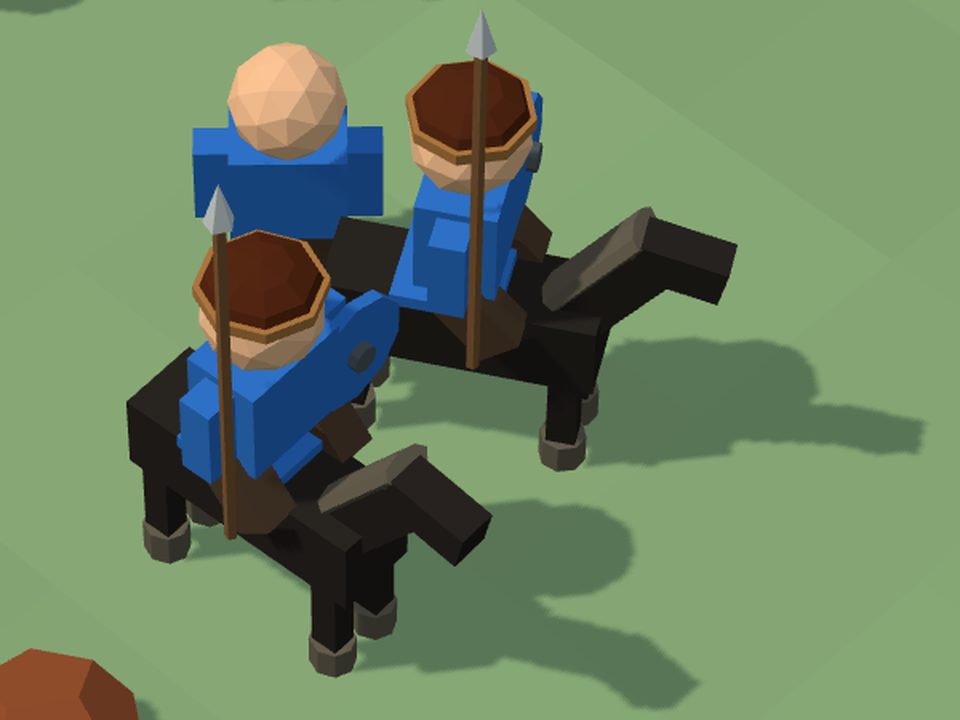
Two Frisian riders on their dark horses. Frisian Rider
Instead of the horseman
A wealthy Frisian on horseback: faster than a horseman. He costs more silver and less iron.
-
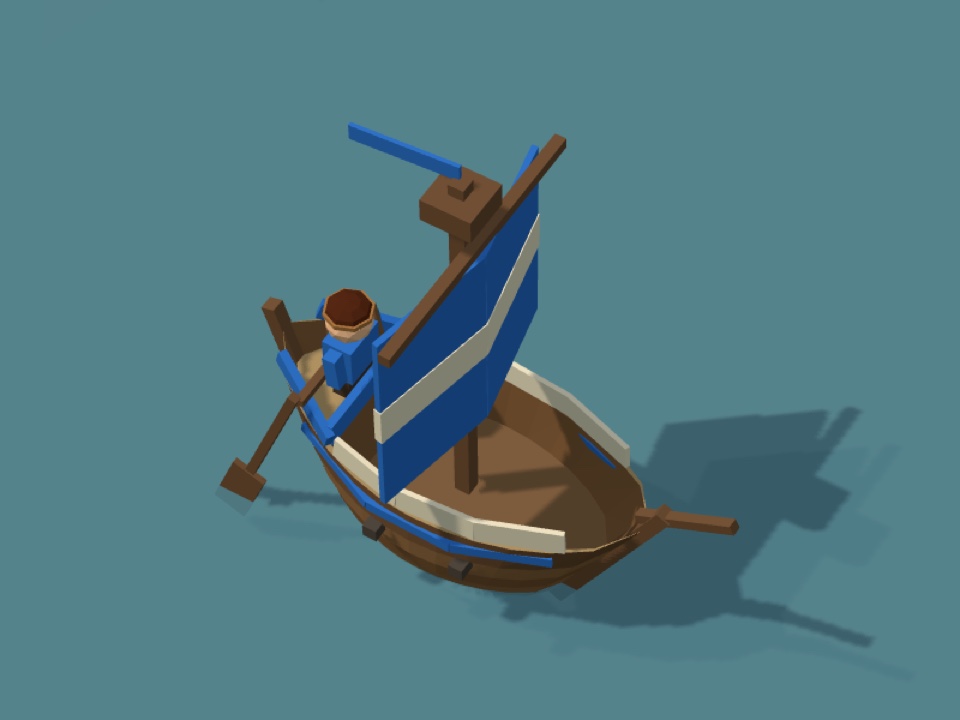
The Frisian Cog, with a linen screen along its sides and a band of linen across the sail. Frisian Cog
Instead of the cog
Sturdier than a cog, and it shoots one tile farther. That makes it more expensive too.
Their own technologies
- Raise the Terp In the hall, in the Trading Age
- Your hall shoots farther, sees farther and is sturdier.
- Frieze Cloth At the wharf, in the Kings' Age
- A hulk brings back even more silver from every trip.


Fortress

Ringburh
In the Kings' Age
Your hall is sturdier and shoots more often, and you can build turfwalls. The ring forts of Zeeland, such as those at Burgh and Souburg, were built in the ninth century against the Danes.
Strong
At sea, with silver, along the coast.
Weak
Deep inland, far from water.
How they play
You grow through the water and through trade, with silver that you swap at the wharf and spend on fast riders. Weak deep inland, on a map with little sea.
How to recognize them
A hall on its terp, of sod and reed. A leather cap or no helmet at all, and a round shield with a boss.
Franks
The king's realm: heavy horsemen and counties.
The Franks subdued Frisia and Saxony, last of all under Charlemagne. His armies had heavy horsemen, the scara. He ruled his realm through counts and royal envoys, the missi dominici. The francisca, the throwing axe of the early Franks, was already an old tradition under Charlemagne.
Now in the game: their own three units, the Counties rule, King's Envoys, Vassals, and Palatium.
“Where the king comes, he stays.”
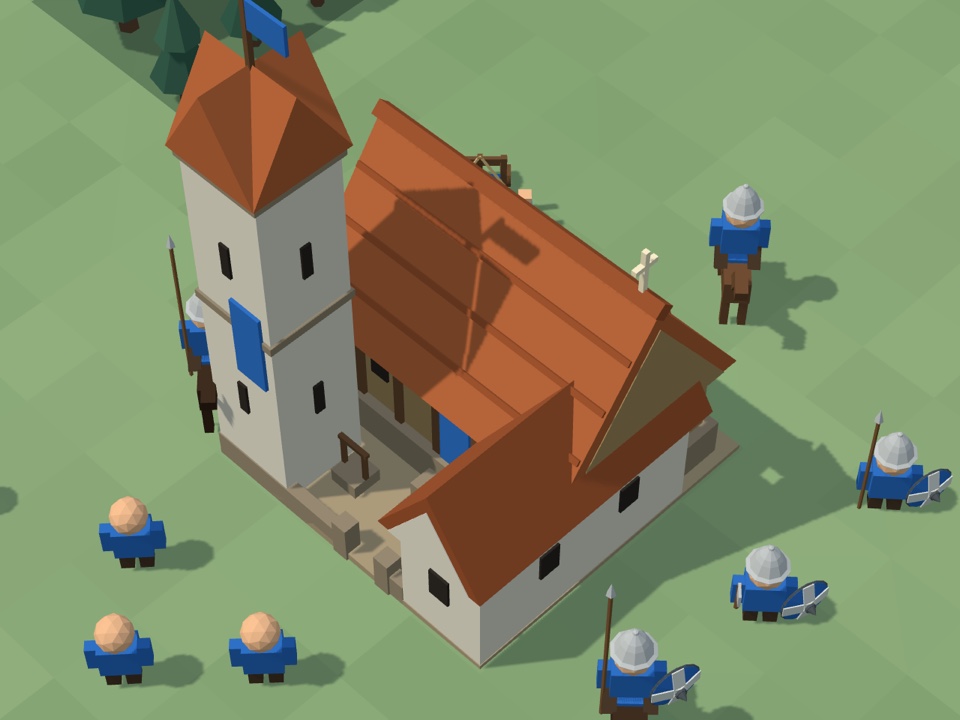
Their own rule: Counties
- You may build a count's court as early as the Trading Age. It is a second hall at the usual price: you drop off resources there, and it trains villagers, even while your hall advances to the Kings' Age.
- But a count's court does not shoot, and it does not keep you in the game. If a count's court is all you have left, you are defeated.
- In the Kings' Age a count's court becomes a regular hall, and you may build a third one.
- So the Franks move to the middle of the map sooner, without being twice as hard to beat.
Their own units
-
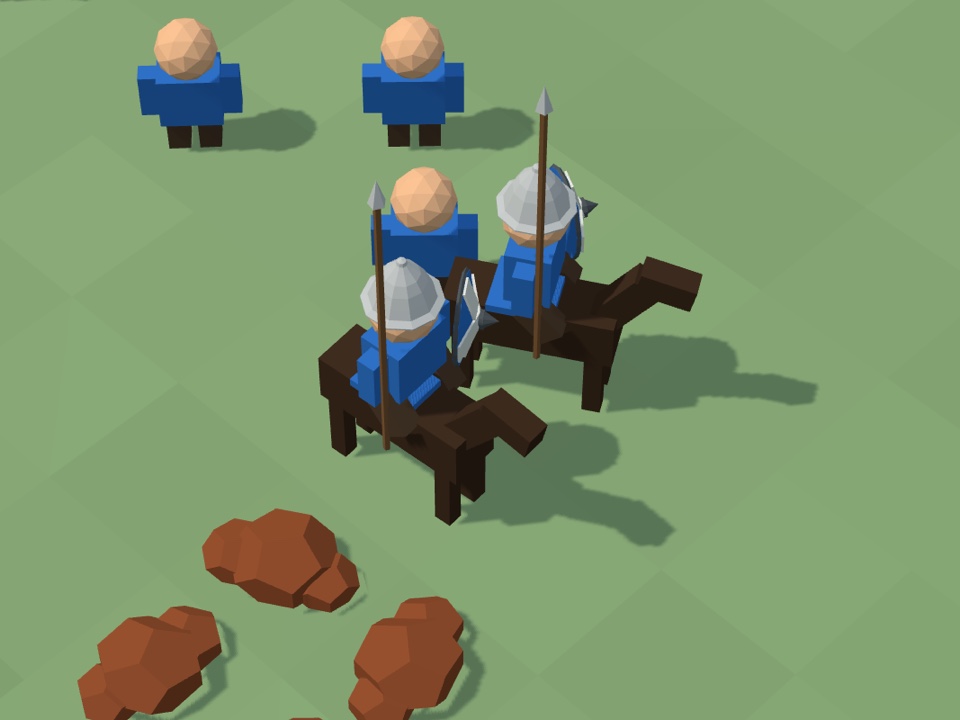
Two scaras with the helmet and shield of the Franks, on their heavy horses. Scara
Instead of the horseman
Heavier and more expensive than a horseman, and a little slower.
-
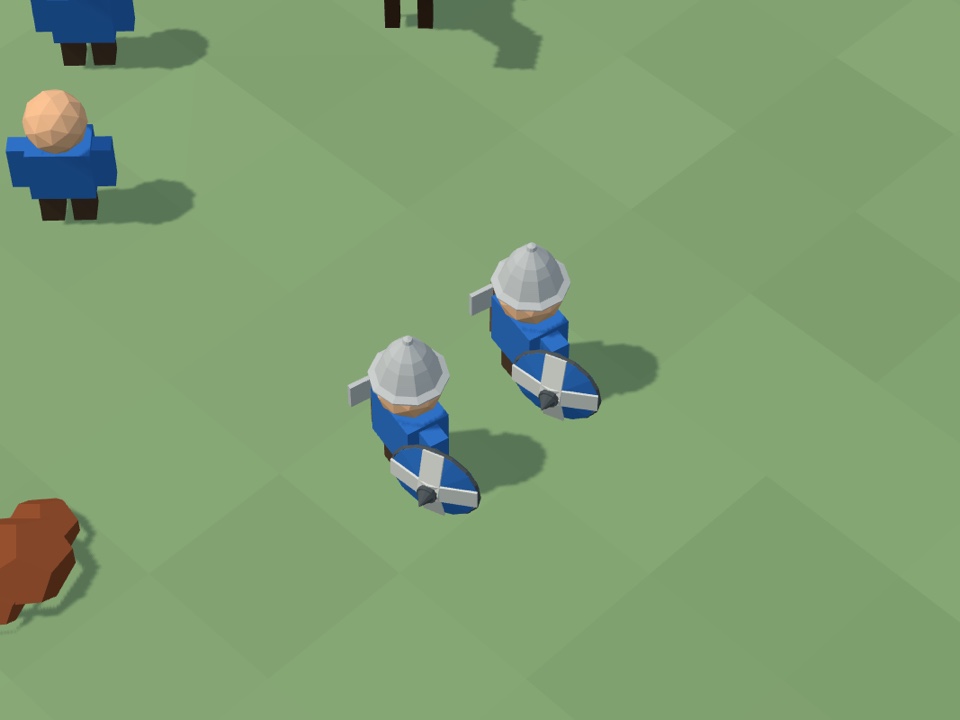
Two axe throwers with the helmet and shield of the Franks. Axe Thrower
Instead of the axe warrior
He carries the francisca. When an enemy unit comes within a few tiles, he stops and throws his axe once. Then he fights up close, as an axe warrior: hard on buildings and on a gatebreaker. He does not throw at buildings or ships. After a while without fighting, he has a new axe.
-
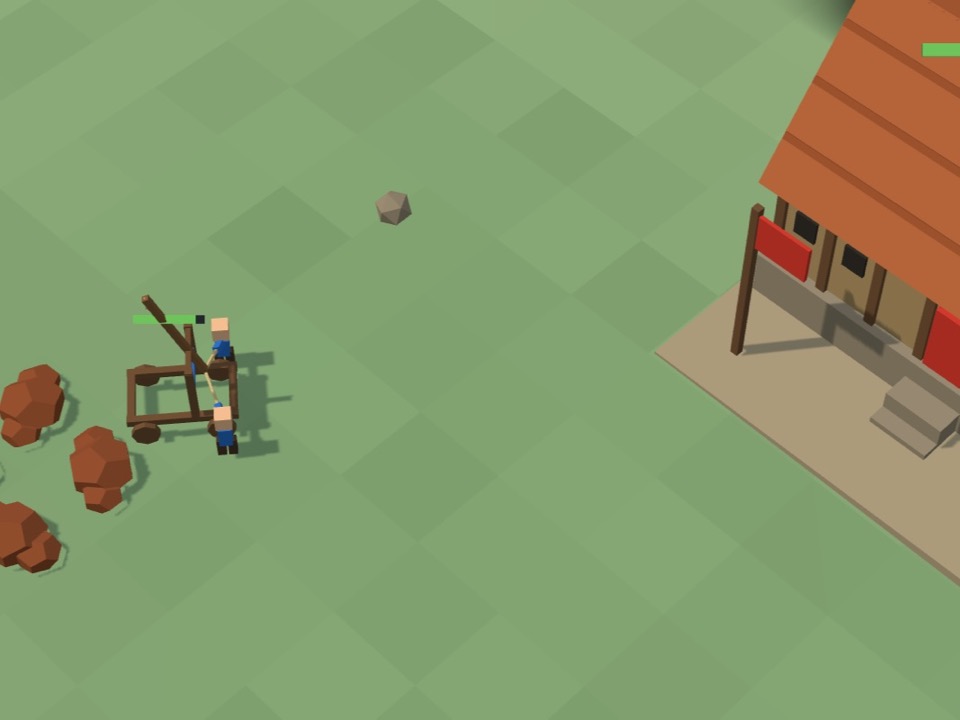
The stone thrower throws stones at a hall. Stone Thrower
An extra unit, next to the gatebreaker
From the barracks, in the Kings' Age. It hits only buildings and walls, from far away, and it does not shoot when it is too close. It is slow, and arrows do little to it. A few stone throwers wear down a hall faster than one villager can repair it, but two repairers keep up. So protect them and chase the repairers away: that is what the scaras are for. It fits on a praam, like the gatebreaker.
Their own technologies
- King's Envoys In the hall, in the Trading Age
- You see where the other players' halls stand, even in the fog.
- Vassals In the stable, in the Kings' Age
- The scara costs less iron.


Fortress

Palatium
In the Kings' Age
All Frankish buildings are made of stone: nothing of theirs burns, and the hall shoots more often. An answer to Pitch Arrows and to the Saxon seax fighters. The Franks never get the turfwall.
Strong
In the open field, and in a long game.
Weak
Expensive: lose your scaras and you fall behind.
How they play
Strong in the open field and in a long game, with costly, heavy units and a count's court in the middle of the map. Vulnerable once the scaras fall, and without any strength of their own at sea.
How to recognize them
A hall with a stone base, a timber top and red roof tiles. The other buildings have roofs of wooden shingles, and with Palatium stone walls and red tiles. A pointed helmet with a narrow brim, and a large domed shield.
Saxons
The people of the forest: the ambush and the shield wall.
The Saxons lived in forest and heath between the Rhine and the Elbe, without a king. Once a year they met at the thing, an assembly, in Marklo. For thirty years they fought Charlemagne, from strongholds such as the Eresburg. That is also where the Irminsul stood, their sacred pillar.
In the game now: their three own units, the forest, Sacred Grove, the Thing at Marklo, and Folkburh.
“The forest does not forget.”
Their own rule: The Forest
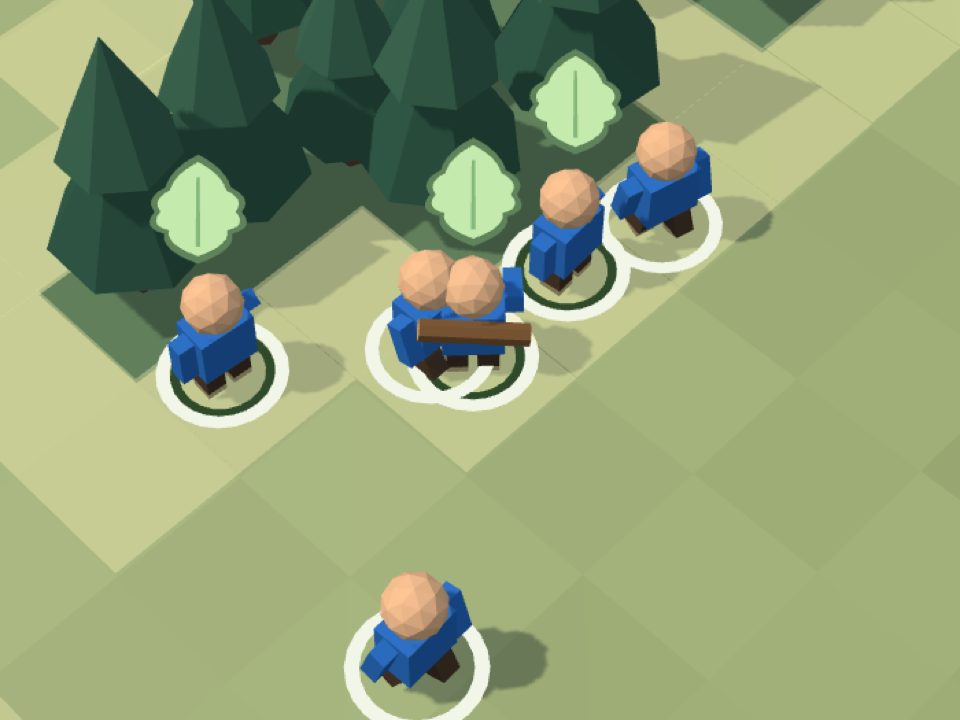
- A Saxon unit standing still beside a tree, or a Saxon building beside a tree, is hidden from enemies. It is not on screen or on the minimap, and you cannot attack it. A hall can always be seen.
- Whoever moves can be seen. After standing still for a second, they are hidden again.
- You see it once one of your units, lookouts or halls, or one of your team's, is within three tiles.
- Whoever attacks from the forest can be seen for ten seconds by the team they attacked.
- Villagers chop wood faster. But whoever clears the forest around their village loses their cover.
Their own units
-
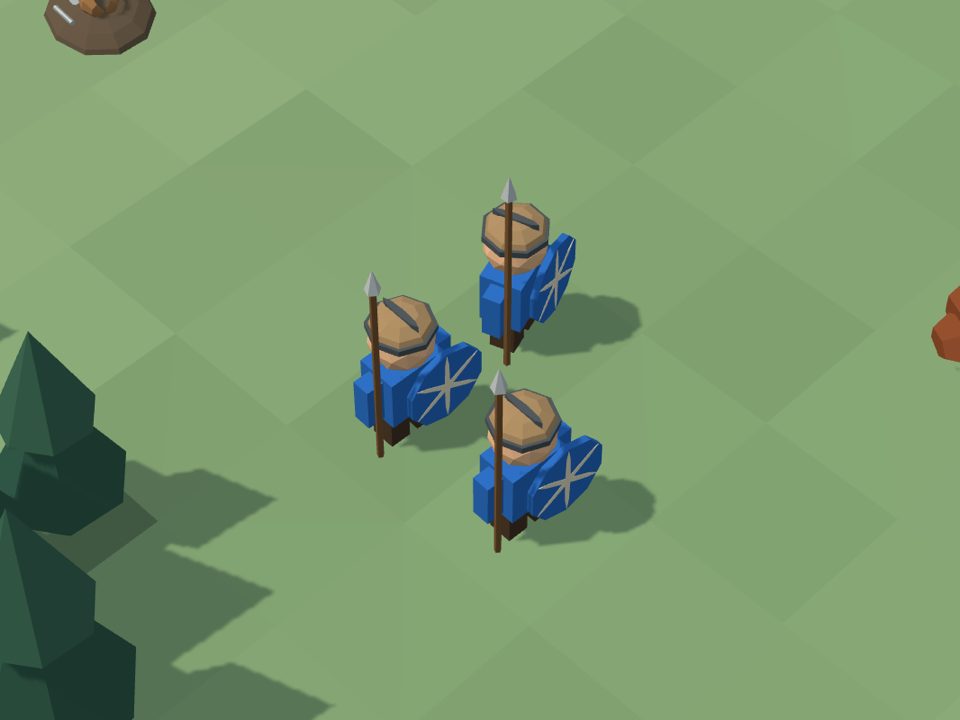
Three shield guards close together: that is how a shield wall stands. Shield Guard
Instead of the spearbearer
Shield wall: with two other shield guards close by, he takes less damage, arrows included. With Linden Shields, even less from an arrow.
-
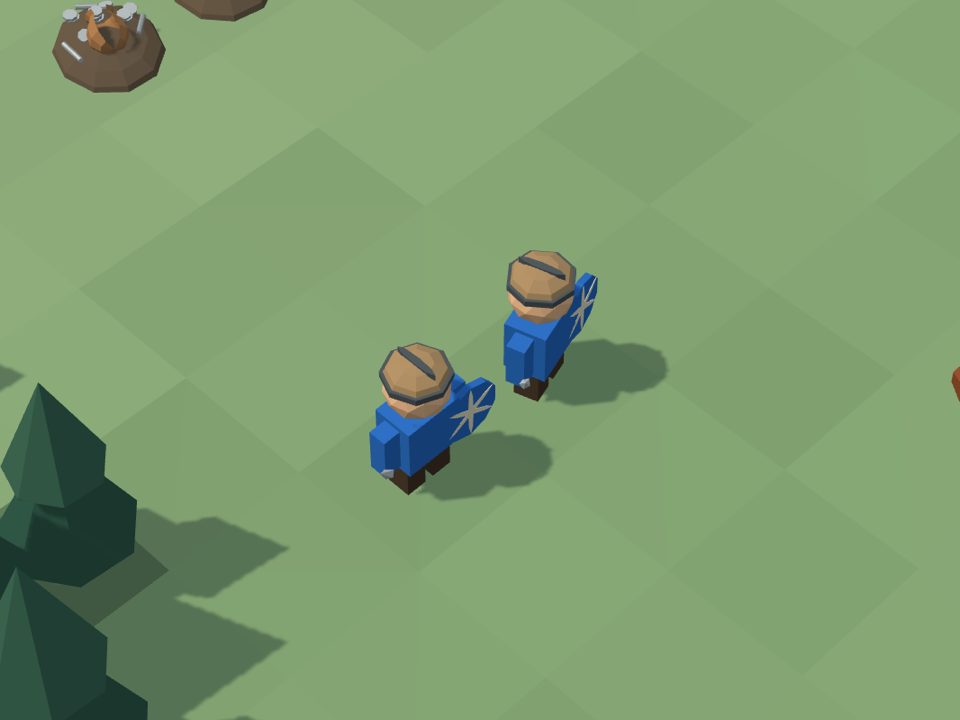
Two seax fighters, with the leather cap and round shield of the Saxons. Seax Fighter
Instead of the axe warrior
Faster and cheaper than an axe warrior, but not as hard on buildings. A raider along the edge of the forest.
-
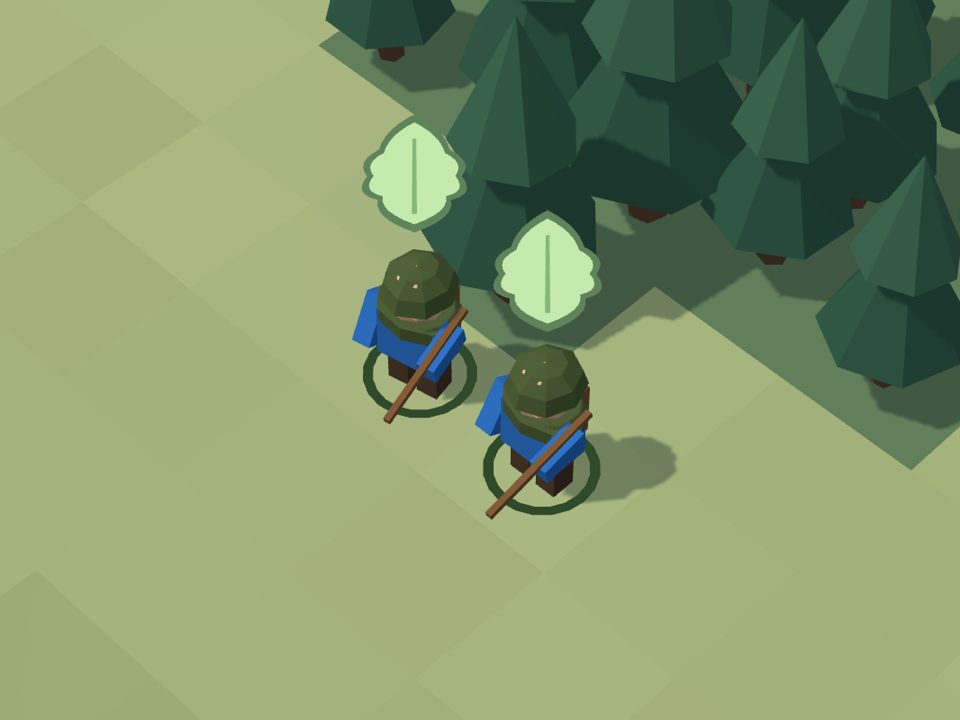
Two woodland archers at the edge of the forest. The leaf and the ring say they are hidden from an enemy. Woodland Archer
Instead of the bowman
Next to a tree he shoots one tile farther. He has slightly fewer hit points than a bowman.
Their own technologies
- Sacred Grove In the hall, in the Trading Age
- A Saxon unit next to a tree hits harder. Named after the Irminsul, the pillar in the sacred grove.
- The Thing at Marklo In the hall, in the Kings' Age
- Free farmers bear arms: your villagers hit harder and can take more.


Fortress

Folkburh
In the Kings' Age
Stakewalls and gates are much sturdier, a lookout shoots one tile farther, and you can build turfwalls, as with Ringburh.
Strong
In the forest, and when their own land is attacked.
Weak
In the open field against heavy horsemen.
How they play
An army you don't see coming, shield walls that catch arrows, and cheap foot soldiers. Weak in the open field against scaras, and on a map with little forest.
How to recognize them
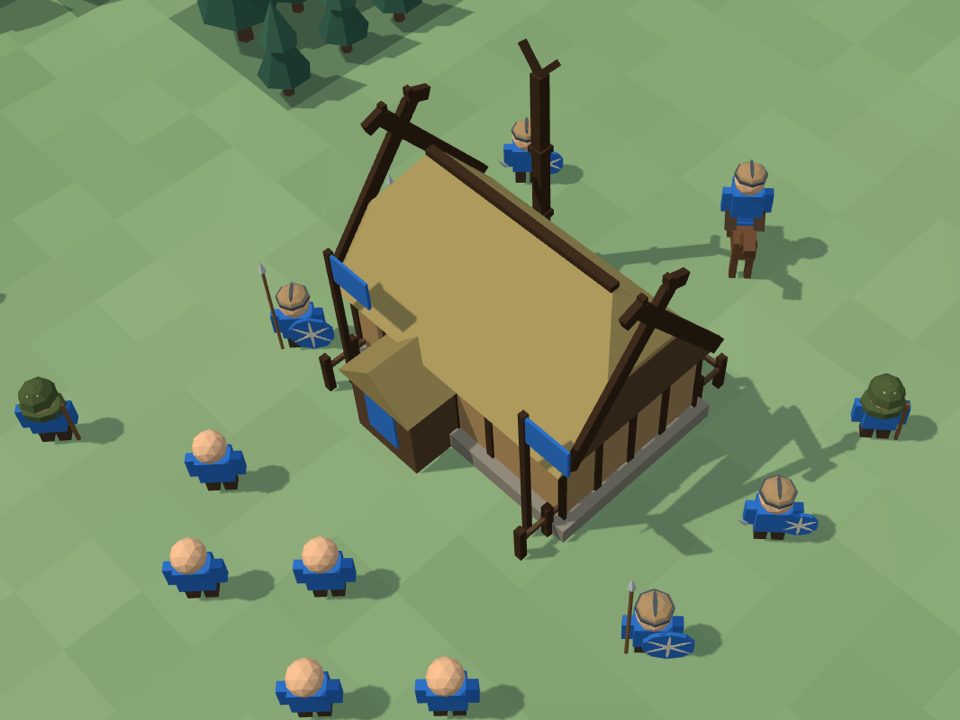
A hall of heavy oak posts with clay between them, under a half-hipped thatched roof with crossed horse heads on the ridge, and other buildings of dark oak. A leather cap with a band, and a round shield in the color of its player, with a light painted sun wheel.
Danes
From across the sea: longships and raids.
Around 800 King Godfred built the Danevirke, the wall between Jutland and the realm of Charlemagne. He moved merchants to Hedeby. Then came the raids across the sea, as far as Dorestad. A strandhugg was a quick raid for cattle on the coast.
Now in the game: the hirdman, the berserker and the longship, the Raiding rule, Strandhugg, Hedeby and the Danevirke.
“The sea is our road.”
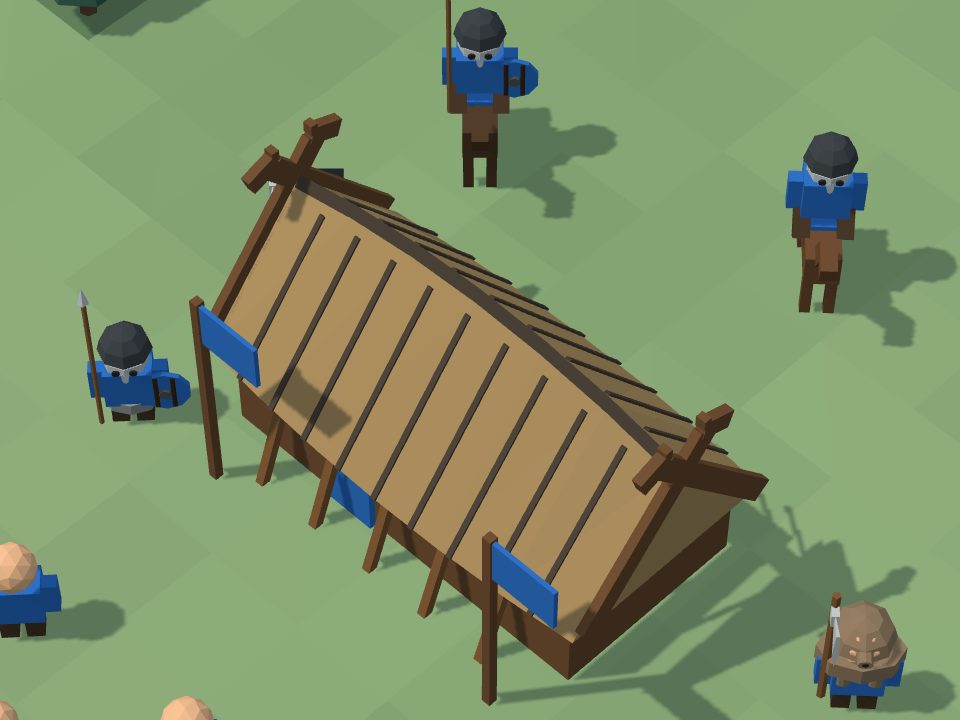
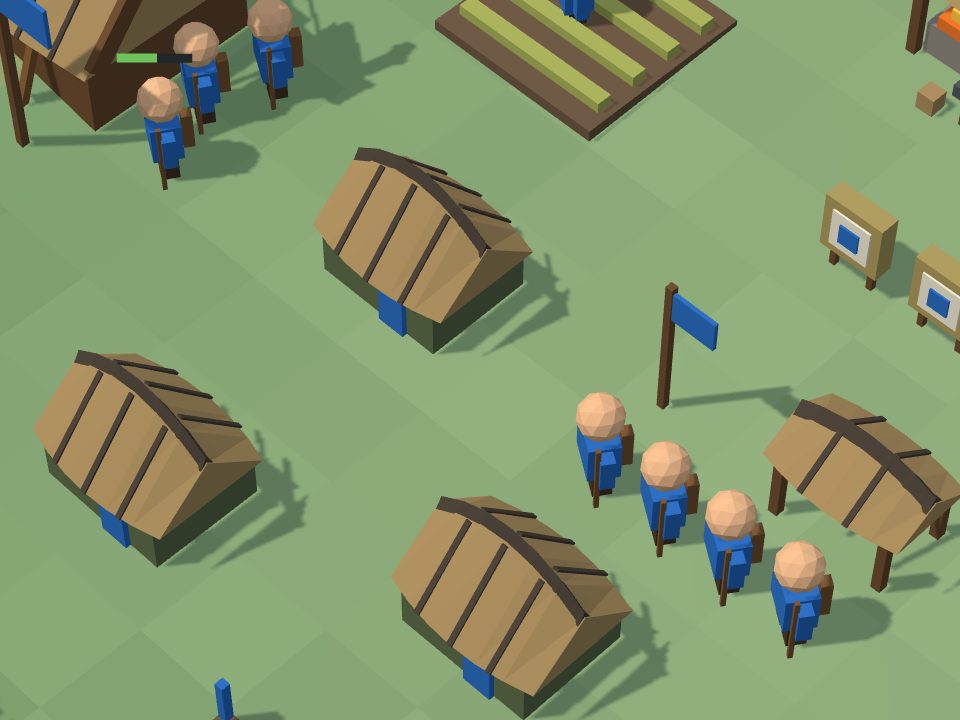
Their own rule: Raiding
- When an enemy building falls to the last blow of a Danish unit or ship, the Danes get a third of what the building cost, plus some food.
- A foundation that is not finished yields nothing, and neither does a building of an ally.
- A Dane who kills an enemy villager takes what the villager was carrying, plus some food.
- So a raid on five houses and a store barn pays for almost three hirdmen. A barracks or a wharf pays more.
Their own units
-
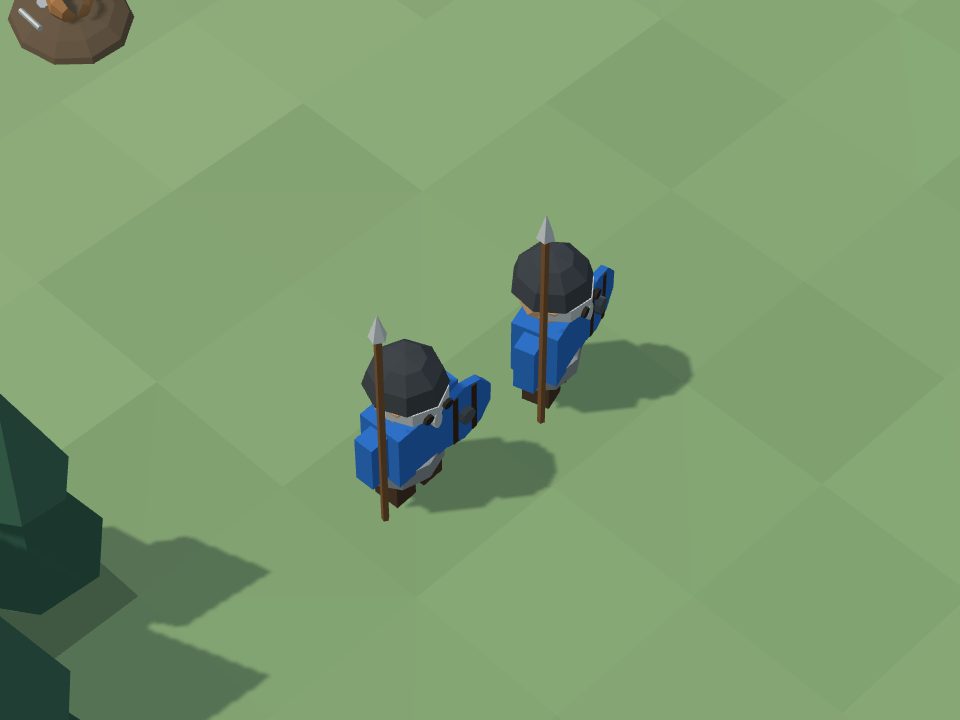
Two hirdmen, with the iron helmet and round shield of the Danes. Hirdman
Instead of the spearbearer
Sturdier and slightly more expensive than a spearbearer, still without iron. Just as good against horsemen.
-
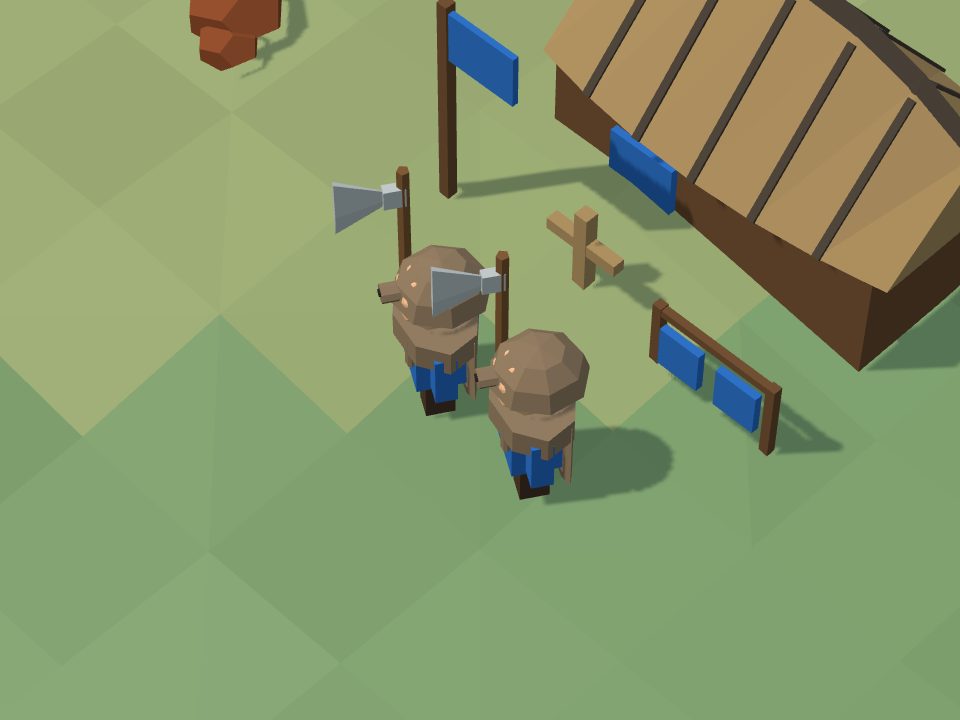
Two berserkers, in a bearskin and with a big axe. Berserker
Instead of the axe warrior
A last stand: below half his hit points he hits much harder and moves faster. As hard on buildings as the axe warrior.
-
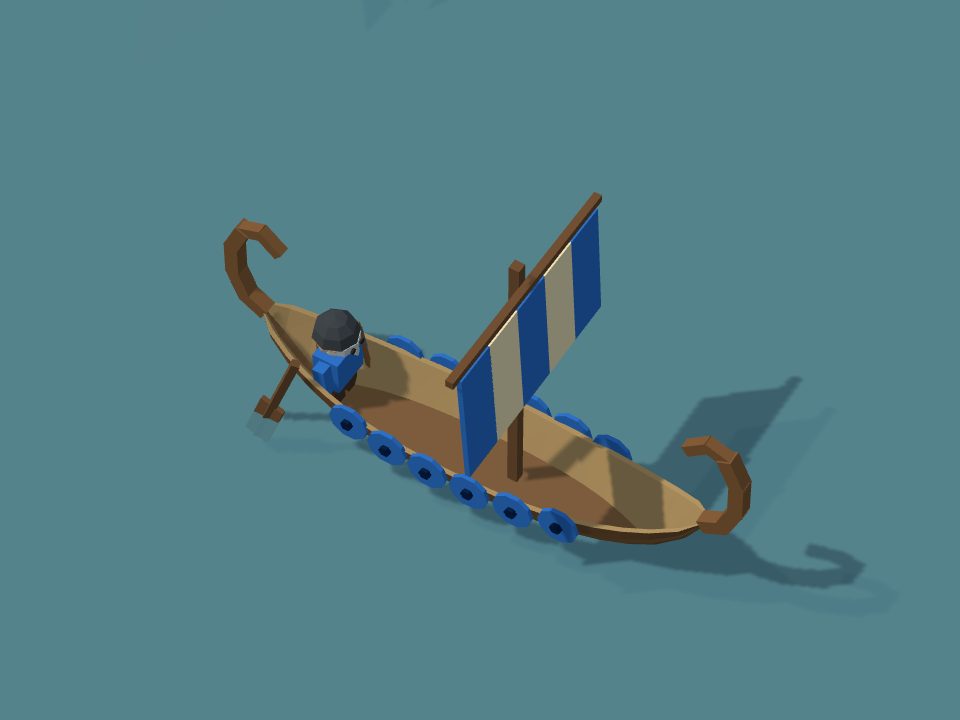
The longship, with its curved prows and the shields along its sides. Longship
Instead of the cog and the praam
Warship and transport in one: it carries troops, on foot or on horseback, and it is faster than a cog. Empty, it fights like a cog. With men on board, it does not attack by itself.
Their own technologies
- Strandhugg At the wharf, in the Trading Age
- Whoever comes ashore from a longship moves faster for a while.
- Hedeby In the hall, in the Kings' Age
- Raiding yields half of what a building cost, instead of a third.


Fortress

Danevirke
In the Kings' Age
You build turfwalls at half the price, and your walls are sturdier.
Strong
Early on, and against a village on the coast.
Weak
In a long game, when the raids fail.
How they play
Fast, early and across the sea. Strong against a village on the coast and in a game that is decided early. Weak in a long game, when the raids fail.
How to recognize them
A longhouse with a curved ridge and a roof of planks, and curved roofs on the other buildings. A round helmet with a spectacle guard, never with horns, and a round shield with its planks showing.
Who is good against whom
-
The scara beats the Saxons in the open field.
-
The Saxons lie in wait for the Danes in the forest.
-
The Danes raid the Frisian coast.
-
The Frisians slip away from the Franks across the water.
That is a direction, not a law. How it really works out, we will see once everything is in the game.